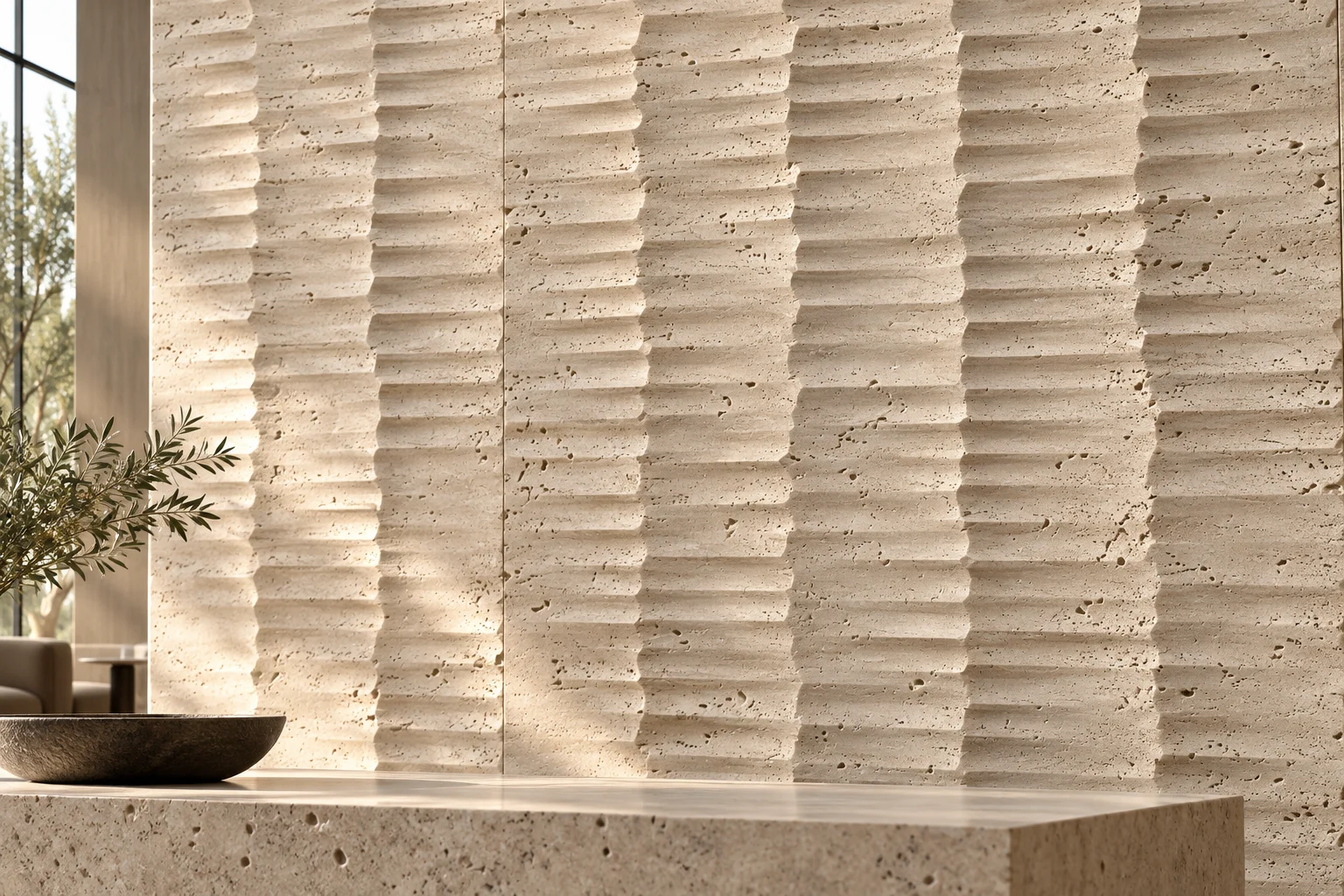

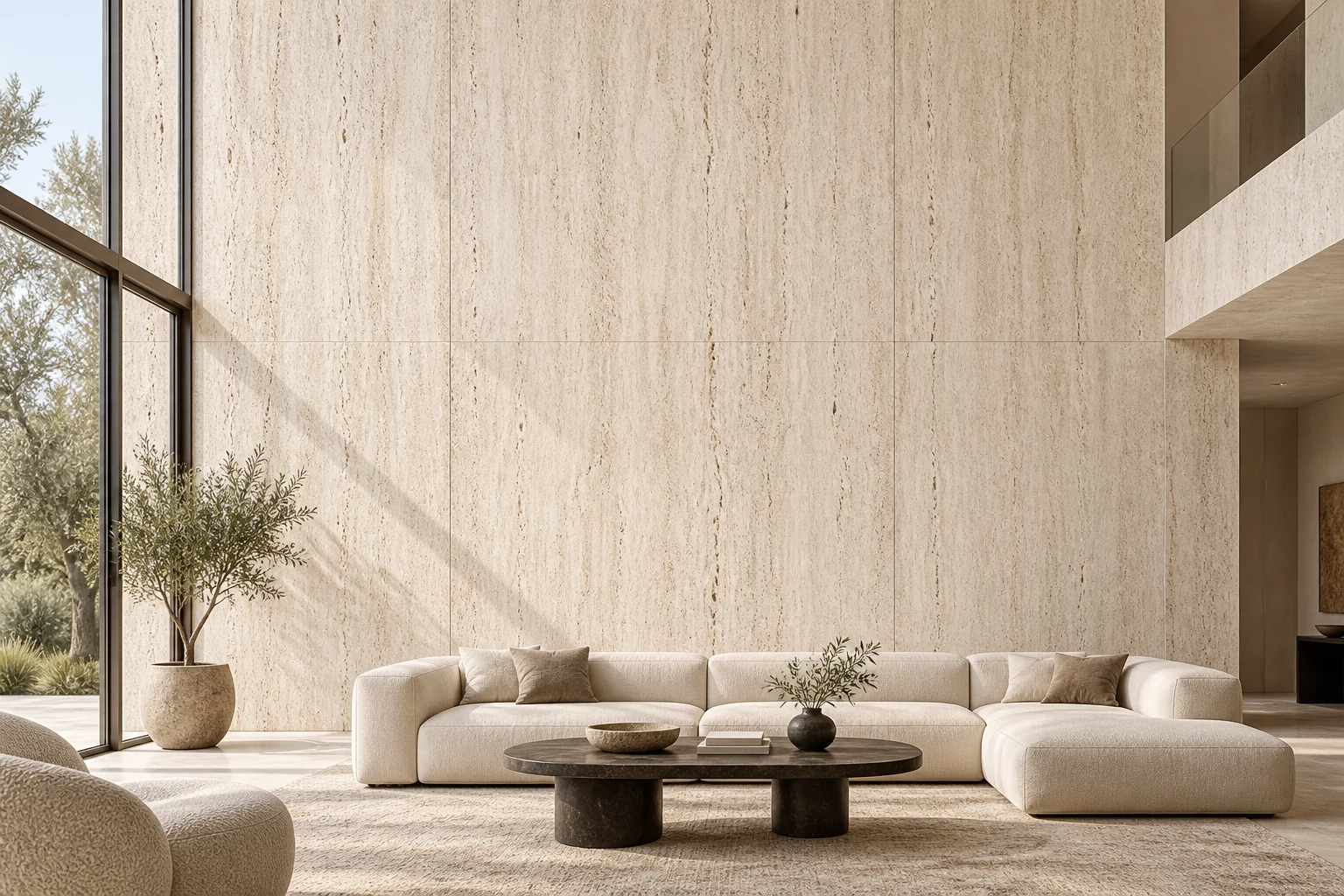
A travertine living room does not need stone on every surface. One well-proportioned wall can set the room’s tone while upholstery, curtains and books supply the softer layers. Begin with what you see from the sofa, not only the entrance photograph.
Choose the wall that holds the room
Draw the wall elevation with the sofa, door openings, artwork and any television in place. A generous uninterrupted field lets the stone’s bands read clearly; numerous small strips can make the same material feel fragmented.
If a television occupies the centre, compare two layouts: stone behind the screen, or stone on the adjacent wall. The latter can give the material a stronger presence when the television is off and avoid forcing the slab pattern around cables and brackets.
Use contrast in texture, not just colour
Place a smooth timber sample, a woven fabric and your proposed metal finish next to the stone. Similar beige colours can still feel distinct when their textures differ. Avoid choosing every item from a photograph: the combined palette should be reviewed under the room’s actual lighting.
The illustration pairs stone with quiet seating rather than a second dramatic pattern. It is a composition idea, not a requirement to use those exact furnishings.
Check the view at everyday distance
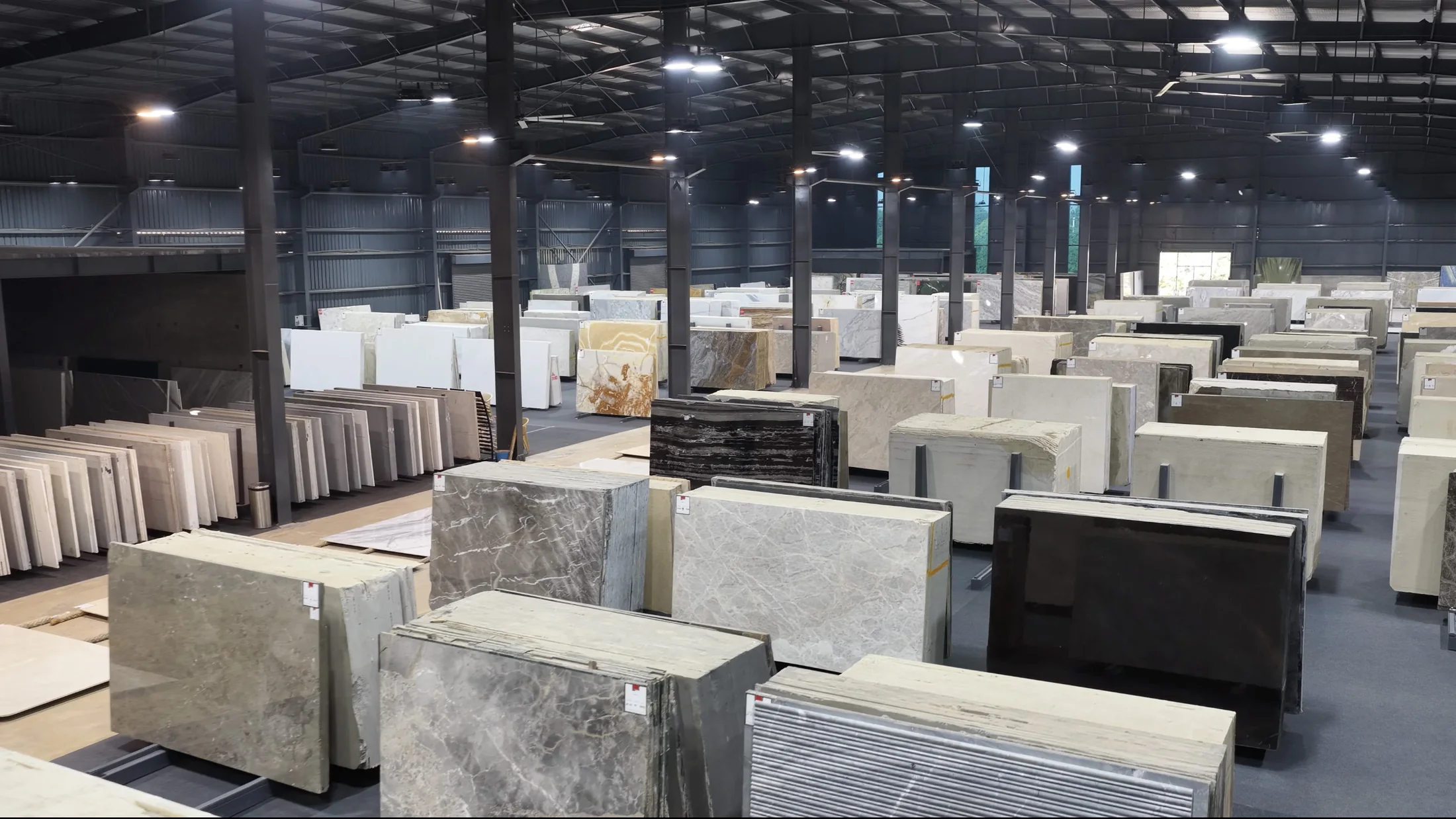
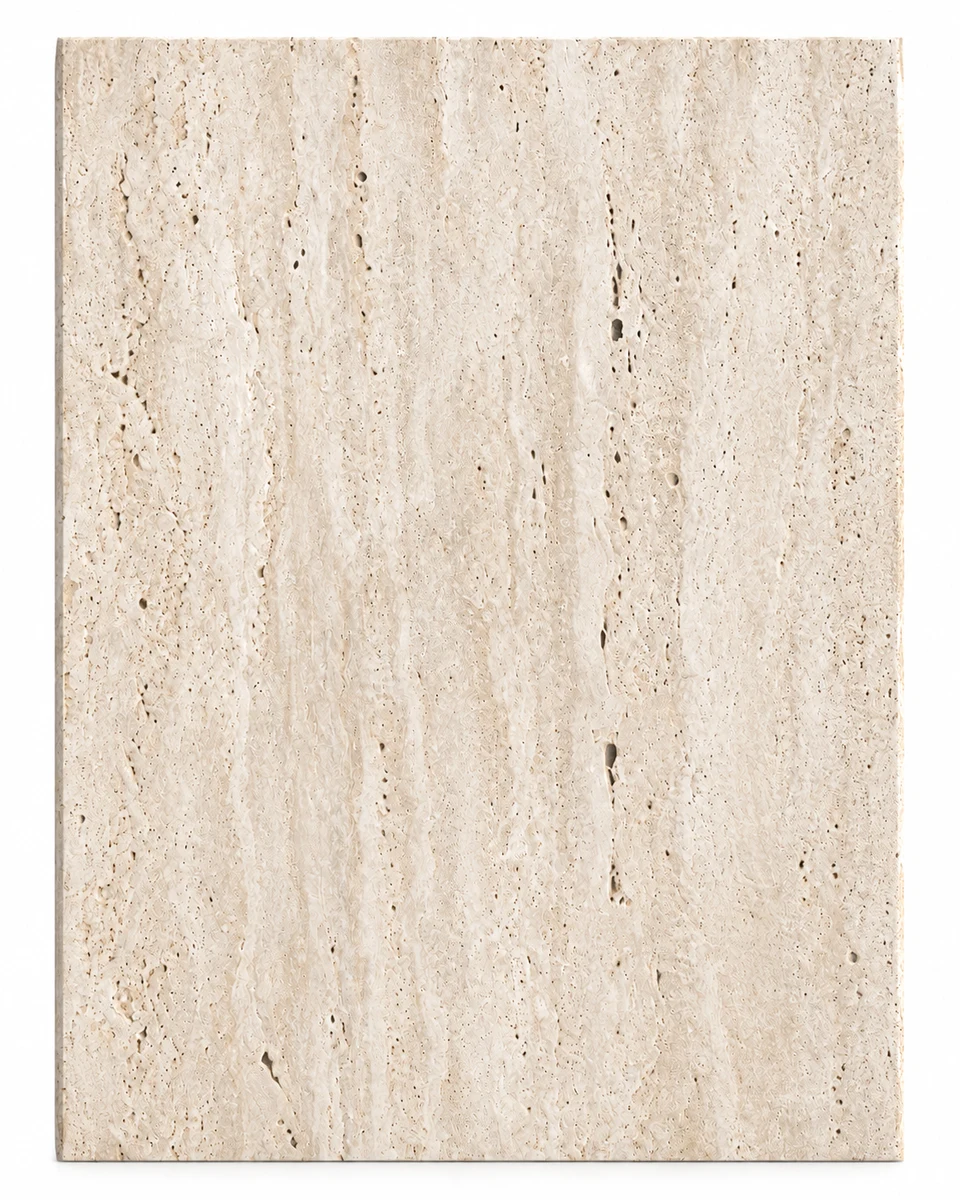
Stand where people sit and walk. A close-up may emphasise pores that become subtle across the room, while broad horizontal bands may become the main feature. Ask to see the full selected slab range before approving the wall.
- Mark joints and openings on an elevation.
- Compare the stone beside the actual upholstery.
- Keep a record of the selected slab faces.
Let one travertine plane lead; give it quieter materials and enough uninterrupted space to read.
Confirm suitability and installation requirements with your architect or qualified stone professional.