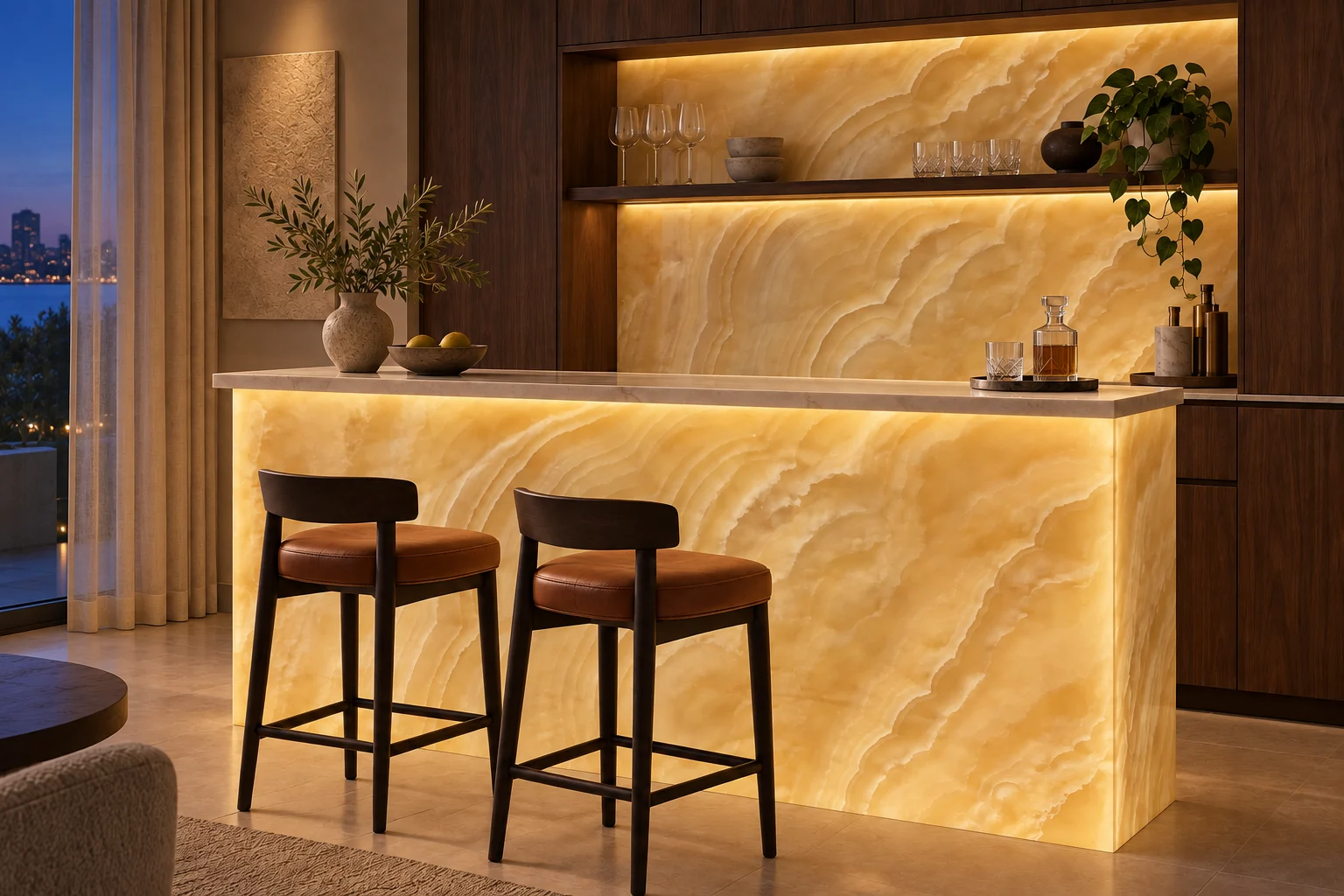

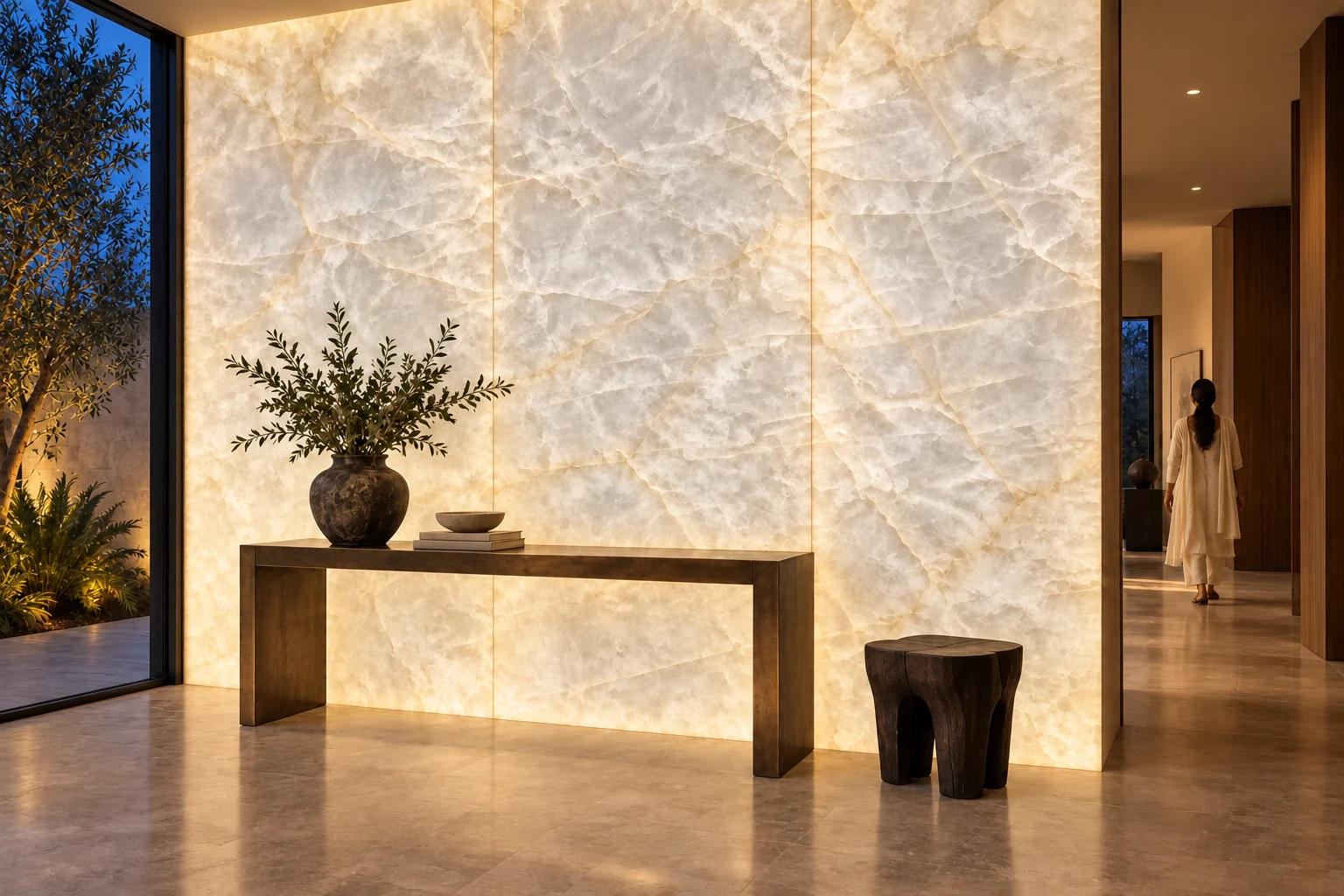
An onyx wall should work when its lighting is off as well as when it is on. Begin with the stone in ordinary light, then develop the illuminated effect with the lighting designer and stone specialists using the actual selected material.
Approve two views of the same wall
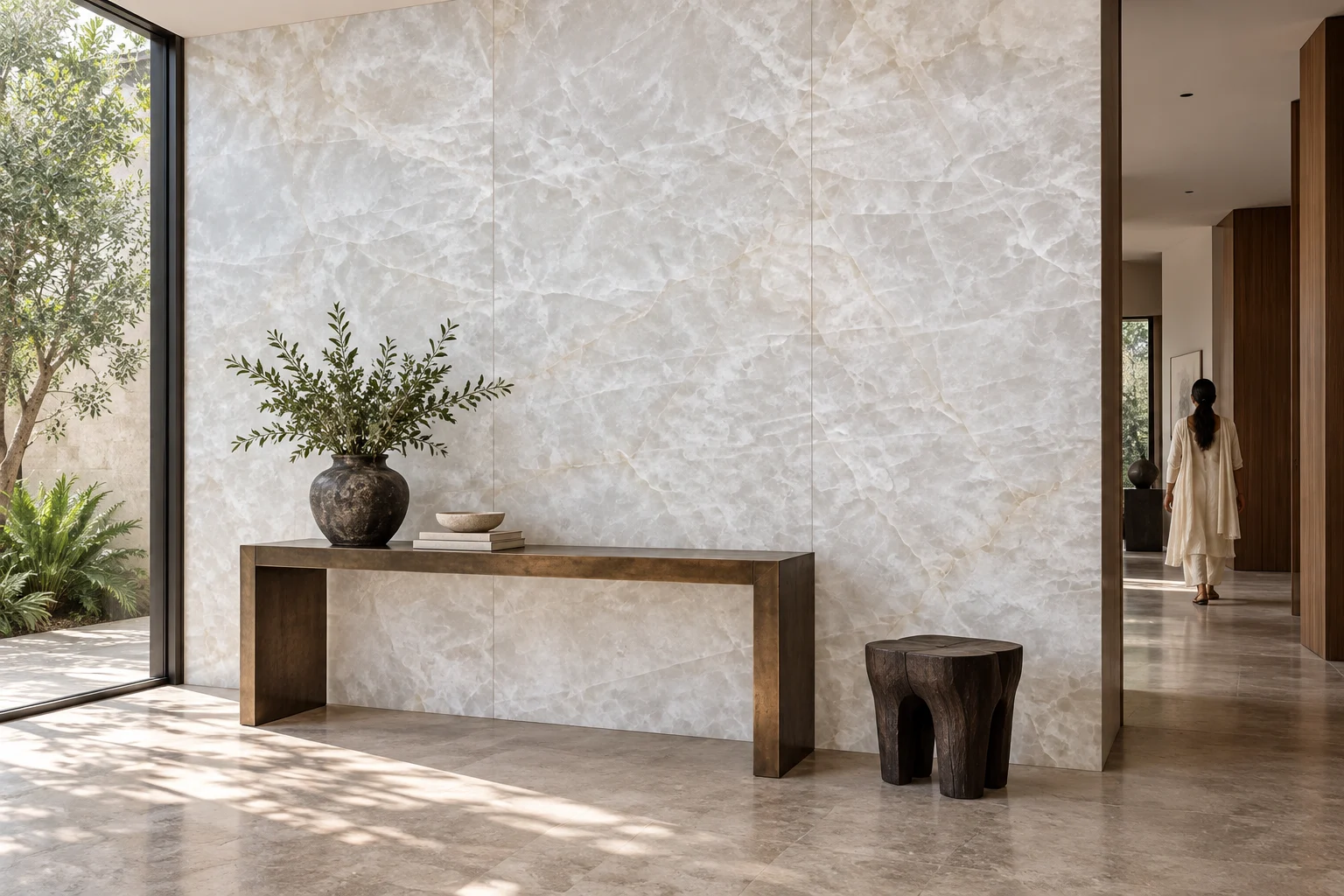
The day view establishes colour, veining and the relationship with the rest of the room. The illuminated view adds another layer but should not be the only reason the selection works. Review both from the main seating or arrival position.
The paired images illustrate this design question. They are not a measured demonstration of how a particular slab transmits light. Thickness, backing, mineral variation and the assembled lighting system must be checked in a physical mock-up.
Ask for an assembly mock-up
A glowing hand sample cannot prove that a complete wall will illuminate evenly. Ask the responsible team to test the proposed assembly, including joints, edges and the light source arrangement. Judge brightness in relation to the room rather than in isolation.
Compare the effect at a comfortable evening setting. More brightness is not necessarily better if it overwhelms the seating area or makes the mineral pattern harder to read.
Plan maintenance before closing the wall
Agree how the lighting components can be reached and who is responsible for the electrical and stone systems. Access should be designed into the wall rather than discovered after installation.
- Confirm the selected slab and backing.
- Review day and evening mock-ups.
- Document controls and service access with the specialist team.
Treat onyx and backlighting as an assembly to test—not an effect to assume from a photograph.
Confirm suitability and installation requirements with your architect or qualified stone professional.