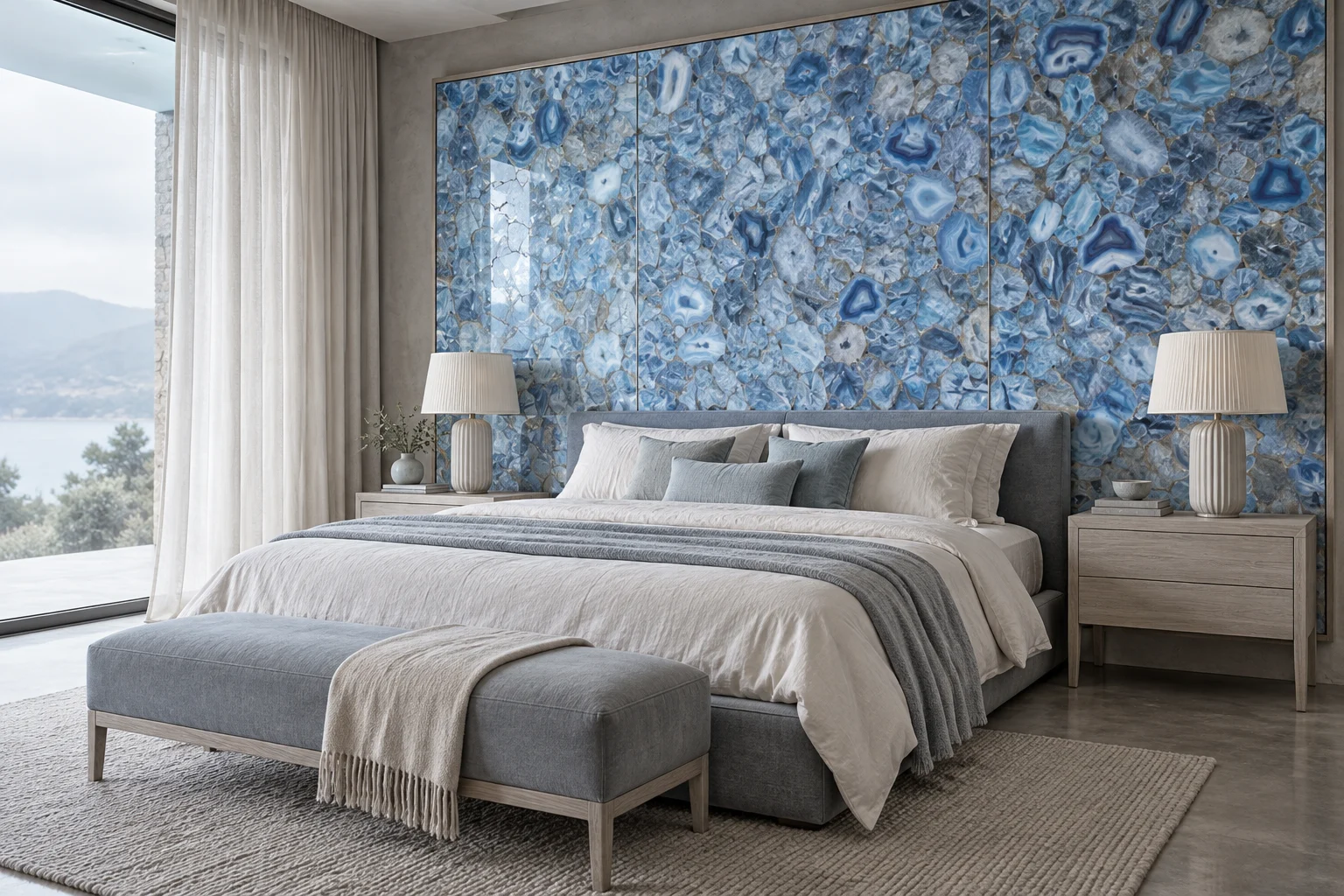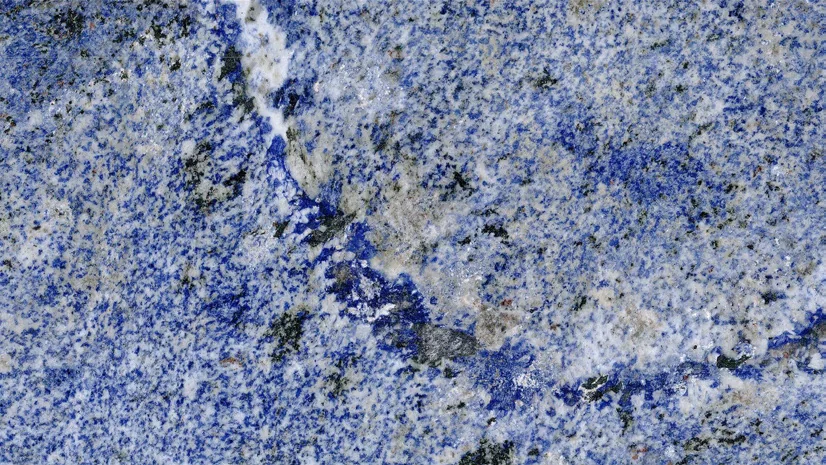

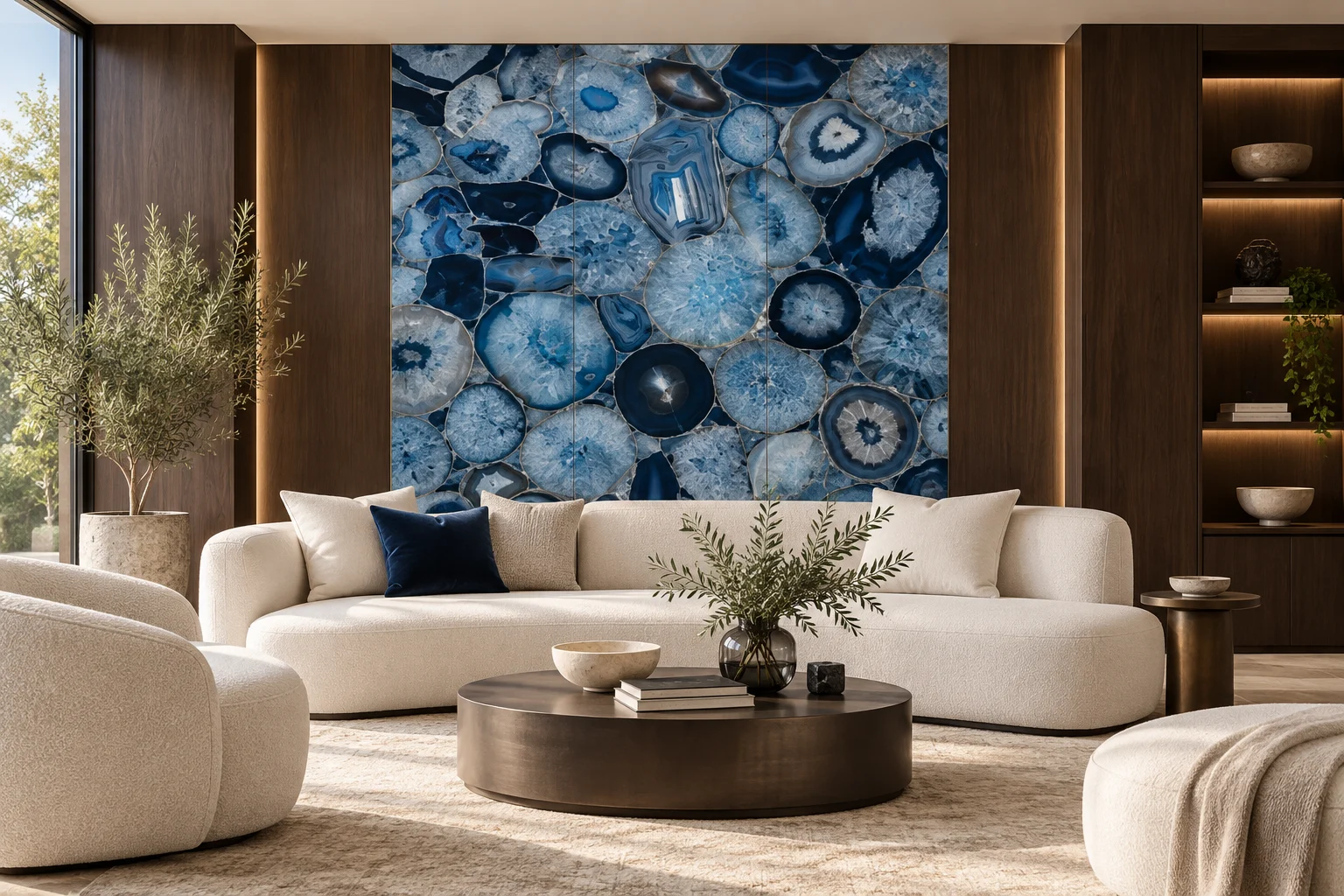
An agate composition is read at several scales: individual rings, neighbouring pieces and the complete panel. A close-up can be compelling while giving little sense of how the material will feel across a full wall.
View the complete composition
Ask to review a representative full panel or the proposed composition, not only a small attractive area. Note the size of the pieces, their spacing and the contrast between the stones and the surrounding matrix.
A room with many small objects may benefit from a more controlled field. A large, simple space can allow the individual pieces and their colour differences to become the focal point.
Draw the panel boundaries
Joints and borders are part of the image. Show the complete wall, including furniture and openings, before deciding where panels meet. The aim is a planned composition, not an assumption that separate panels will form one seamless pattern.
Compare a contained panel with full-wall coverage. The more restrained option may let the mineral detail read more clearly.
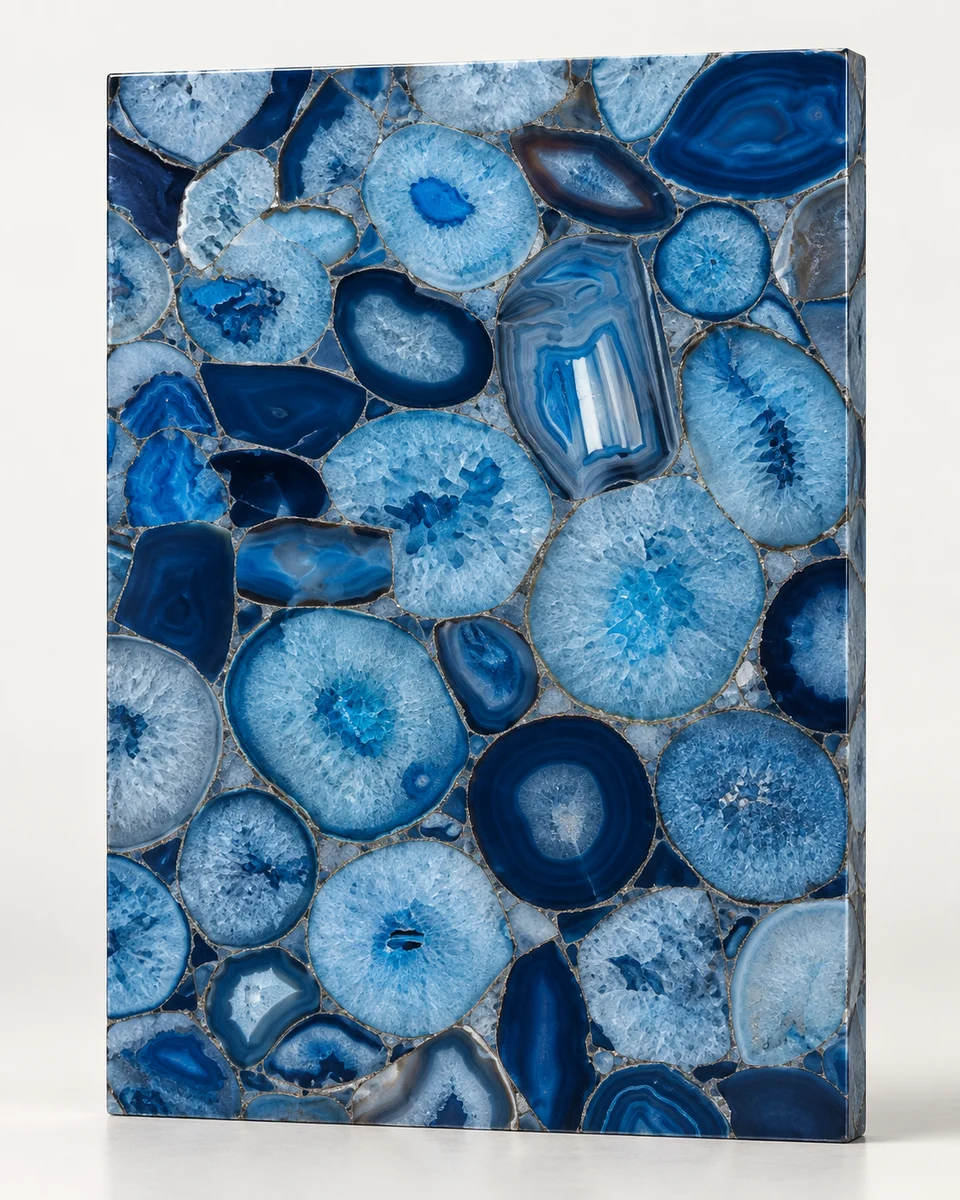
Confirm the supplied construction
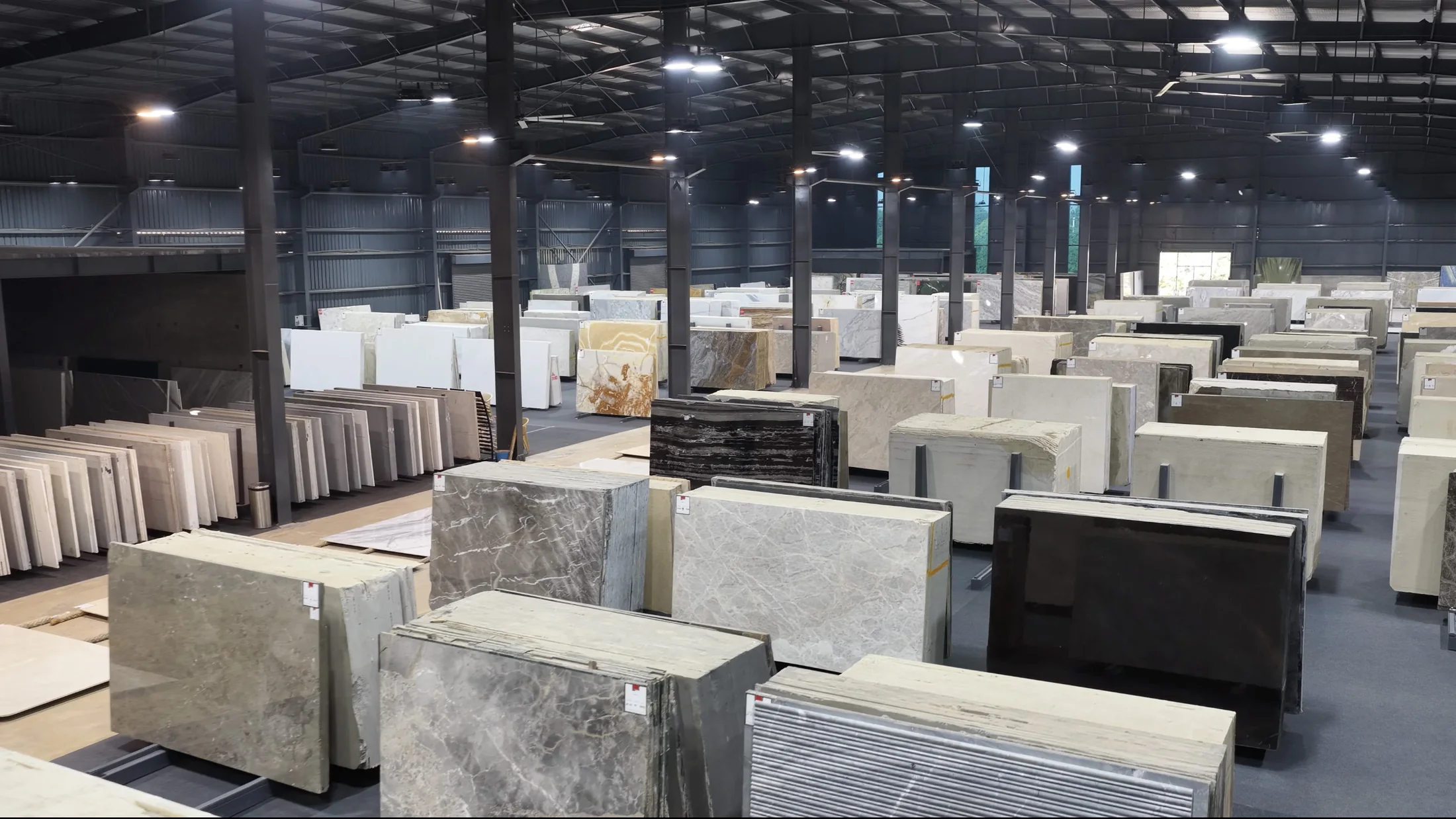
Semi-precious compositions may involve backing, binders and assembly methods that affect how they can be used. Ask for the actual product information and have the project team confirm support, fixing and suitability. An interior illustration cannot establish these properties.
- Review the entire panel.
- Approve the colour and piece-size range.
- Confirm construction and intended application.
Select an agate wall as a complete composition, not a collection of close-up details.
Confirm suitability and installation requirements with your architect or qualified stone professional.